
If you’re planning a new build, conversion, or tree work, there’s a strong chance you’ll need a bat survey. Bats are protected under UK law, and disturbing them or their roosts without the proper survey and mitigation strategy can result in planning delays or legal consequences.
In this guide, we break down:
- When bat surveys are required
- What a bat survey involves
- Legal and planning considerations
- How to avoid common delays
- Who to contact for expert support
Whether you’re a developer, architect, or homeowner, we can provide your project with a detailed bat survey in East Kilbride, Glasgow, Lanarkshire and the rest of Scotland.
Why Are Bat Surveys Needed During Planning?
Bats have faced significant declines across Europe, due to negative impacts on their habitats, roosts and prey (insects – often midges!), leading to them having protected species status.
Therefore, bats and their roosts are protected under the Conservation (Natural Habitats, &c.) Regulations 1994. This means it is a criminal offence to:
- Intentionally or recklessly disturb bats
- Destroy, damage, or block access to a bat roost
Local planning authorities in Glasgow and Lanarkshire require an ecological assessment to rule out harm to protected species. If your site is a suitable habitat for bats, you’ll need a Preliminary Roost Assessment (PRA) or potentially further surveys.
Failing to obtain a bat survey at the right stage can lead to:
- Delayed planning decisions
- Denied applications
- Risk of prosecution
You’ll likely need a bat survey if:
- You’re converting or demolishing a building (especially pre-20th century, stone or slate roofed, or with roof voids)
- You’re doing loft conversions or roof repairs
- The site is near woodlands, watercourses, hedgerows, or known bat habitats
- You’re planning tree works that could affect mature trees with cavities
- You’re installing floodlighting or external lighting in sensitive areas
Common project types requiring surveys:
- House extensions
- Barn conversions
- School refurbishments
- Agricultural or commercial developments
If your site triggers any of the above, a bat survey will likely be a mandatory component of your planning application.
When Can I Get a Bat Survey?
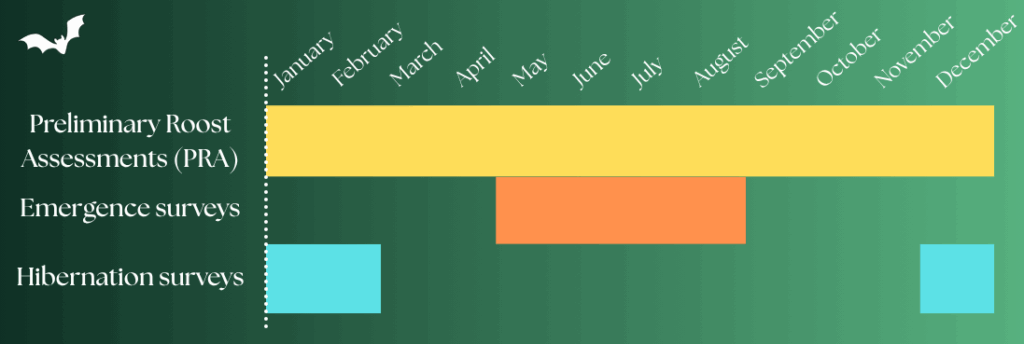
Preliminary Roost Assessments can happen at any time of year, while emergence surveys can only take place when bats are active between May and August. Hibernation surveys can take place between December and February.
What Happens During a Bat Survey?
1. Preliminary Roost Assessment (PRA)
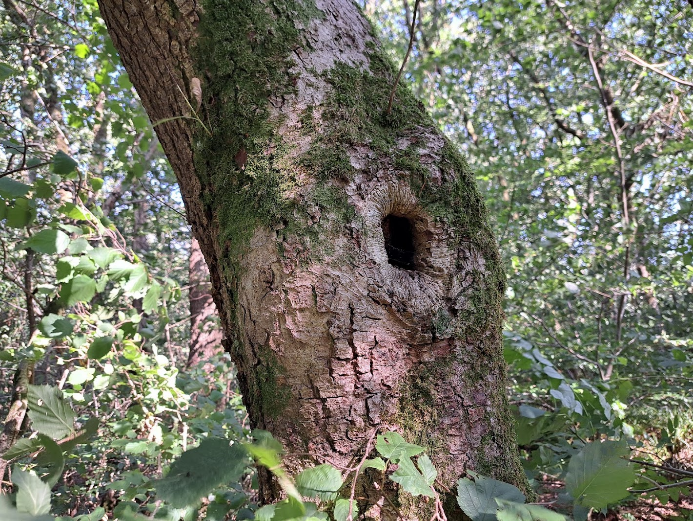
A PRA involves a licensed bat ecologist inspecting buildings, trees and other structures, looking for evidence of bats (e.g. droppings, feeding remains) or roosting features. These features might include gaps in slates, loft spaces, or hollow trees. Any bat droppings found can also be sent off for DNA analysis to confirm the species of bat.
2. Emergence & Re-Entry Surveys
If signs of use or suitability are found (by a PRA, for example), dusk or dawn surveys will be required. These are usually carried out between May and August, when bats are most active. This survey involves ecologists monitoring suspected roosts at sunset, when bats start to come out. The team will use bat detectors and video recording (often with night or thermal vision) to observe the building, tree or structure. With this equipment, we should be able to identify the species present, where they are entering/exiting from and what type of roost it might be. Usually at least two or three surveys are required, following best practice guidelines.
Video: Night vision cameras can capture bats emerging (the bright white areas are bats)
3. Hibernation Survey
A hibernation survey will tell you whether bats are present during hibernation in the winter. Using specialist equipment, we can check potential hibernation locations within trees, buildings and other structures.
What If Bats Are Found?
If it looks like there are bats present, in your planning application, you will need to suggest ways to either enhance the habitat for them or provide mitigation or compensation measures, such as bat boxes. A bat-licensed ecologist should complete pre-work surveys before any works take place, as well as moving any live bats located during works. You will need a licence from NatureScot too – at EP Ecology, we can help you apply for this.
In most cases, finding bats does not mean your project will be refused, but it must follow appropriate ecological guidance.
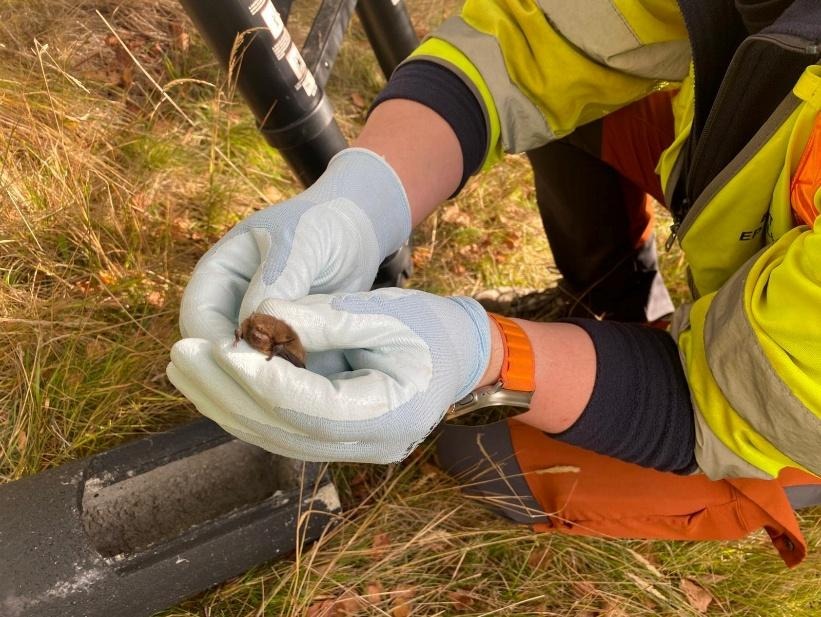
Image: Under licence, bats can be safely handled and moved.
How to Plan Ahead & Avoid Delays
Timing is critical. Because dusk/dawn surveys can only be conducted in summer months, it’s essential to:
- Contact an ecologist early (at least 3–6 months before submitting plans)
- Include ecological survey windows in your project timeline
- Budget for potential follow-up surveys or licensing needs
Quick Tip for Developers:
Add a line item in your project checklist: “Book bat survey (May–Aug window)”. This simple step can help avoid months of delays.
Working with a Professional Bat Surveyor in East Kilbride, Glasgow, Lanarkshire & Across Scotland
At EP Ecology, we offer:
- Licensed and experienced bat ecologists
- Rapid reporting (typically within 10 working days)
- Full support from PRA to mitigation and licensing
- Experience providing bat survey reports in Glasgow, Lanarkshire, and across Scotland
We’ve worked on projects from rural barn conversions to urban school redevelopments. See our work here.
Book a Bat Survey With EP Ecology
Don’t leave your application to chance. If you suspect your site could affect bats, speak with our team today to schedule a survey or request a free quote.
Call us on 01355 457577
Email info@careful-sapphire-emu.185-220-60-54.cpanel.site