FAQs | Ecological Consultancy Services in East Kilbride & Beyond
At EP Ecology, we believe in making ecological consultancy simple, transparent, and accessible. Below you’ll find answers to the most frequently asked questions about our ecological consultancy services in East Kilbride, Glasgow and across Scotland, including pricing, processes, and compliance. Whether you’re planning a development or simply curious about how protected species surveys work, this page is here to help.
FAQS | General
What ecological surveys do you offer?
We offer a full range of ecology surveys for planning applications, including:
- Preliminary Ecological Appraisals (PEAs)
- Protected species surveys (bats, badgers, birds, otters, newts, reptiles, water voles)
- Habitat surveys (UKHab, Phase 1 Habitat, NVC)
- Invasive species assessments
- Peat depth and hydrology assessments
- Ecological Impact Assessments (EcIA)
- Biodiversity Net Gain planning
- Ecological Clerk of Works (ECoW)
How much does an ecology survey cost in Scotland?
Prices start at around £600 + VAT for basic surveys such as a Preliminary Roost Assessment and can range up to £1,500+ for complex projects involving multiple species or habitats. Costs vary based on:
- Size and complexity of the site
- Location and travel requirements
- Type and number of surveys needed
- Seasonality and urgency
We provide clear, bespoke quotes with no hidden fees.
What areas do you cover?
We provide ecological consultancy services throughout Scotland including:
- Glasgow
- Lanarkshire
- Ayrshire
- Edinburgh
- Stirling
- Dumfries and Galloway
- Central Belt and surrounding regions
Our office is based in East Kilbride, South Lanarkshire, giving us access to most of Scotland.
Do I need a bat survey for my planning application?
Yes, if your project involves working on or near buildings, trees, or habitats that could host bats, a bat survey is likely required. Bats are a protected species in Scotland and disturbing them or their roosts without proper assessment is a criminal offence.
Start with a Preliminary Roost Assessment. If signs of bats are found, you may need further dusk or dawn emergence surveys. Learn more on our Bat Surveys page.
How long do ecology surveys take?
It depends on the survey type, but for small sites we would estimate::
- PRA (bat): Up to 4 hours on-site
- PEA: Up to 1 day on-site
- Bird surveys: May require several visits at different times of year, each visit lasting several hours
- Seasonal surveys (e.g., bat, newt): Up to 4 hours on site
Reports are usually delivered within 10 working days of survey completion.
When is the best time of year for ecological surveys?
Many species have restricted survey seasons:
- Bats: May to August (emergence surveys)
- Great Crested Newts: March to June
- Birds: April to July (breeding season)
- Badgers: Year-round, with best results in spring or autumn
We advise planning well ahead to avoid missing seasonal windows.
How do I book a survey with EP Ecology?
You can:
- Call us on 01355 457577
- Email info@careful-sapphire-emu.185-220-60-54.cpanel.site
- Use our online contact form to request a quote
We’ll assess your needs and propose a suitable survey plan.
Are your ecologists licensed and qualified?
Yes. Our ecologists:
- Hold relevant licences for protected species surveys (e.g., bats, newts)
- Are members of CIEEM (Chartered Institute of Ecology and Environmental Management)
- Operate in line with industry standards and NatureScot guidelines
What makes EP Ecology different from other ecological consultants in Glasgow?
- Local knowledge: Based in East Kilbride, serving Glasgow and all of Scotland
- Speed: 10-day turnaround on most reports
- Trusted by planners: Our reports are accepted across local councils
- Full compliance: We follow CIEEM and NatureScot best practice
- Fair pricing: Transparent pricing and friendly advice
What is an Ecological Clerk of Works (ECoW)?
An ECoW monitors your construction site to ensure works comply with wildlife legislation and ecological mitigation plans. They are often required as a planning condition.
Our ECoWs:
- Attend site meetings
- Supervise works near sensitive habitats
- Report on ecological compliance
Can you help with biodiversity net gain or enhancement plans?
Yes. We provide:
- Biodiversity enhancement strategies
- Urban greening suggestions
- Net gain metrics and reporting
- Support for BNG planning conditions
These plans are increasingly required by planning authorities.
What is the process after a survey is complete?
- You receive a full report within 10 working days
- The report includes:
- Survey findings
- Ecological constraints and opportunities
- Next steps or mitigation advice
- You review the report and pay the invoice
- You submit the report with your planning application
We are happy to liaise with your planning consultant or architect directly.
Can you survey during winter?
Some surveys are possible year-round (e.g., PEAs, badger surveys), but others, such as bat emergence or GCN surveys are seasonally restricted. We can advise on what is achievable. Of course, the Scottish weather can also have an effect on when surveys can take place safely, so site visits during the winter may be subject to change.
Do you offer free quotes?
Yes. All our quotes are free, fast, and tailored to your site’s requirements. There is no obligation to proceed.
Do you offer out-of-hours or urgent surveys?
Yes, we can accommodate tight deadlines and evening visits where necessary. Let us know your timescales and we’ll do our best to assist.
Do you work with homeowners or just large developers?
We work with all clients including:
- Individual homeowners
- Architects and planning consultants
- Housing associations
- Commercial developers
No job is too small or too complex.
What happens if protected species are found?
We will:
- Advise on mitigation or compensation
- Support licence applications
- Adjust timelines to comply with ecological legislation
- Ensure your development stays compliant
How far in advance should I book an ecological survey?
Ideally 4–6 weeks ahead, especially during peak survey season (May to September). This ensures availability and avoids planning delays.
Are you insured?
Yes. EP Ecology holds full professional indemnity and public liability insurance appropriate for all survey and consultancy work.
Can you liaise directly with my local planning authority?
Yes. We frequently work alongside planning officers to resolve queries and clarify ecological submissions.
Do you offer other services like tree surveys or drainage assessments?
No, we focus purely on ecology. However, we can recommend trusted specialists for arboricultural and drainage services.
What is your typical report turnaround time?
We deliver most reports within 10 working days from survey completion. Faster options may be available depending on the scope and urgency.
FAQs | Preliminary Ecological Appraisal (PEA)
What is a Preliminary Ecological Appraisal (PEA)?
A PEA is a type of ecology survey which assesses a site in terms of the habitats and species present, with a particular focus on protected and priority habitats and species. For example, protected species would include badgers, otters, water voles, bats, reptiles, birds and many others. Protected or priority habitats might include things like ancient woodland and even hedgerows. The PEA should therefore tell you what species and habitats are likely to be present on a site, help identify relevant mitigation measures (e.g. what you should do if a protected species is identified on site), tell you whether further ecological surveys might be needed, and identify possible enhancements for biodiversity. Essentially, it’s as the name suggests – a first look at a site to assess it in ecological terms.
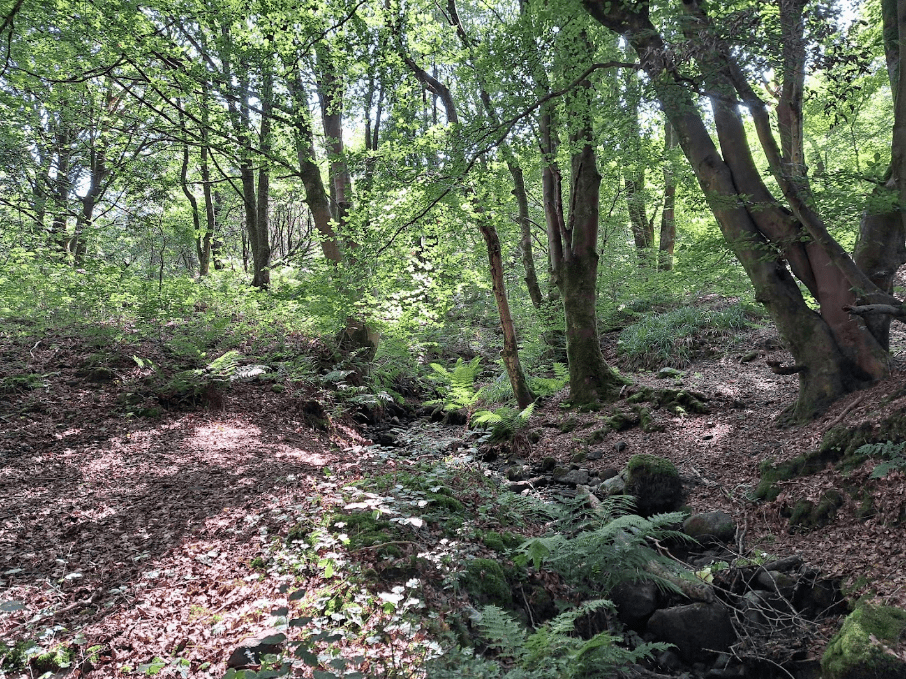
Image: Semi-natural broadleaved woodland, an example of the type of habitat we might record on a PEA.
Why do I need a PEA?
Your local planning authority may have asked that you do an ecology survey as part of your planning application. This is because the local authority has a duty to conserve biodiversity, and legal protection is in place for different habitats, species and designated sites. By doing a PEA, this could be used to inform an Ecological Impact Assessment (EcIA) and further relevant surveys. A PEA is a useful way of providing ecological information which can be used for planning applications, and can help you learn more about the biodiversity you might have right on your doorstep.
What does a PEA involve?
First up, a desk study helps to gather information about the site and surrounding area up to 2km. For example, we can find out a lot from pre-existing biological records and looking at maps to identify nearby nature conservation sites. A suitably qualified ecologist would then visit the site and its surrounding area to conduct a walkover survey. They will map the types of habitats present and look for signs of protected or priority species. For example, we might keep an eye out for signs of badger setts, look out for bird nests, identify potential bat roosting features in trees or buildings, and examine different tracks and signs we come across. We would add any notable aspects to our map of the site, and also check for any invasive plant species. Both the desk study and walkover survey are then written up into a report.
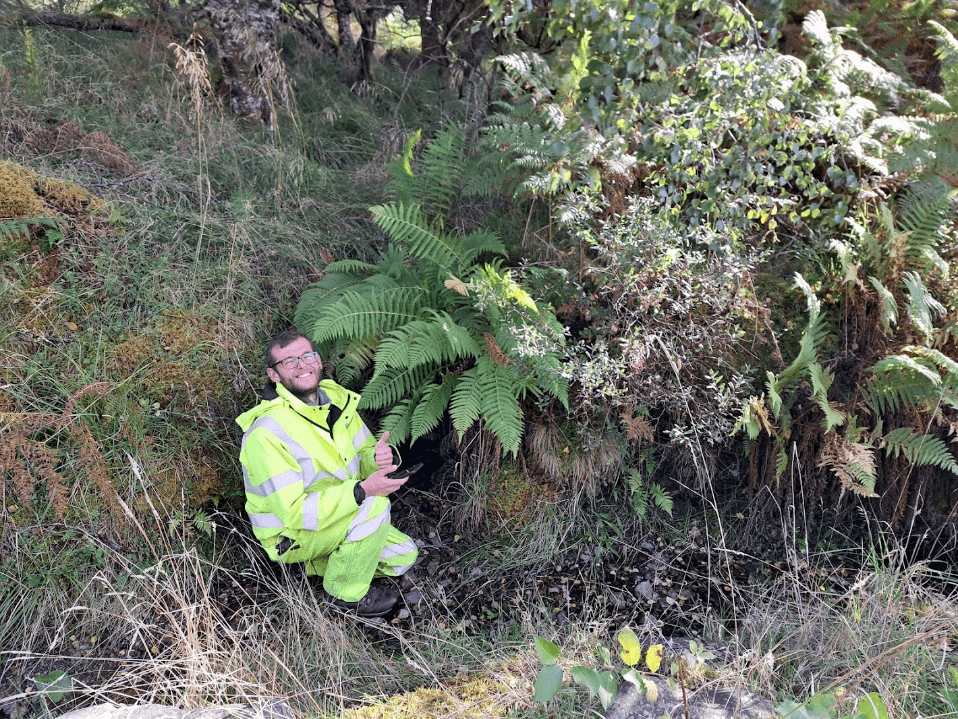
Image: EP Ecology assistant ecologist Derrin gets to work identifying fern species.
How can I use the information gained through a PEA?
You should get a report outlining the findings of the PEA, and the results of the PEA may be enough to tell you whether the impacts of any proposed work would be minimal or possible to avoid (and so, further detailed surveys may not be required). However, the PEA may also contain recommendations suggesting that more detailed ecological surveys are needed, which would be needed to support your planning application. Remember the PEA is a preliminary look giving an overview, and so, it might be the case that more work is needed to confirm that harm is not coming to protected or priority species or habitats. You should also see the results of a PEA as an opportunity to think about different ways to enhance your site for biodiversity.
When can PEAs happen?
PEAs can happen throughout the year, although in the winter months much of the vegetation will be dormant. This means there will be a limitation to the survey (plus, the weather conditions may be less than ideal). The preferred timing would be between April and October with the optimal months being May and June.
I need a PEA, what's next?
At EP Ecology our expert team can do PEAs across Scotland. Get in touch today for a free no obligation quote (info@careful-sapphire-emu.185-220-60-54.cpanel.site).
FAQs | Otter Surveys
Why do I need an otter survey?
Otters are protected species in Scotland, and it’s estimated there are around 8,000 otters here. Perhaps a previous ecological survey (such as Preliminary Ecological Appraisal) has identified that otters might be present on your site, and further detailed otter surveys have been requested by the planning authority. At EP Ecology we can help conduct otter surveys and write species protection plans.
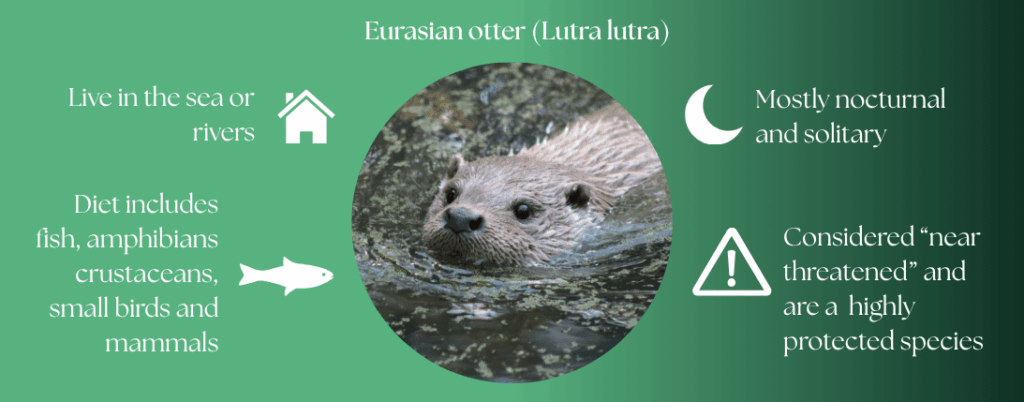
Where can otters be found?
Otters are semi-aquatic mammals, and you’ll find them in both freshwater and marine areas. In Scotland we just have one species of otter (the Eurasian otter, Lutra lutra), so whether you see an otter in a river or in the sea it’s the same species. Otters that live near the sea will still need a freshwater source to keep their insulating coat salt-free, and you might be more likely to see them during the day. Otters that live in rivers tend to be more nocturnal so you are less likely to spot one.
What are the signs of otters?
Some of the more obvious signs of otters include their prints and spraint. Otters have five toes, which makes the print distinct to a dog which only has four visible toes. As their diet includes fish, their typically black spraint may have visible fish scales which may even “sparkle” if you shine a light on it. To tell if it’s mink or otter, give the spraint a sniff – if it smells sweet it’s probably otter, but if it smells repulsive it’s probably mink! You may also come across anal jelly (which is actually now thought to be mucus from the gut) and look out for paths and slides where the otters enter or exit the water.
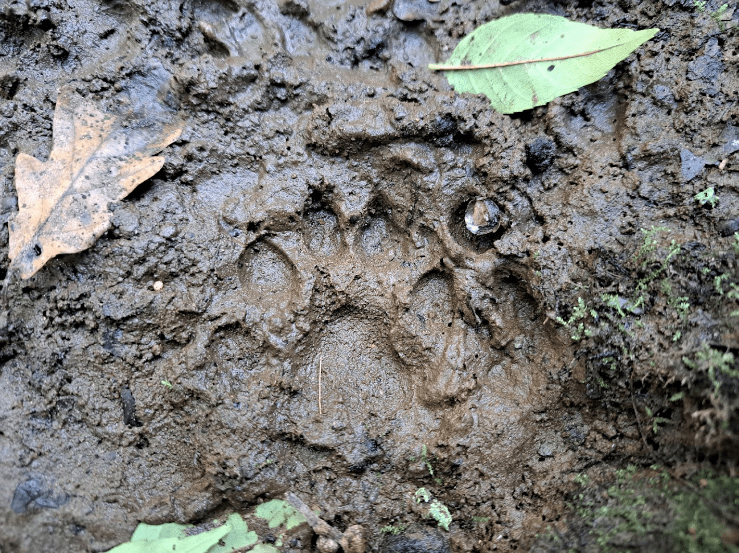
Image: Signs of otter include their distinctive five-toed tracks
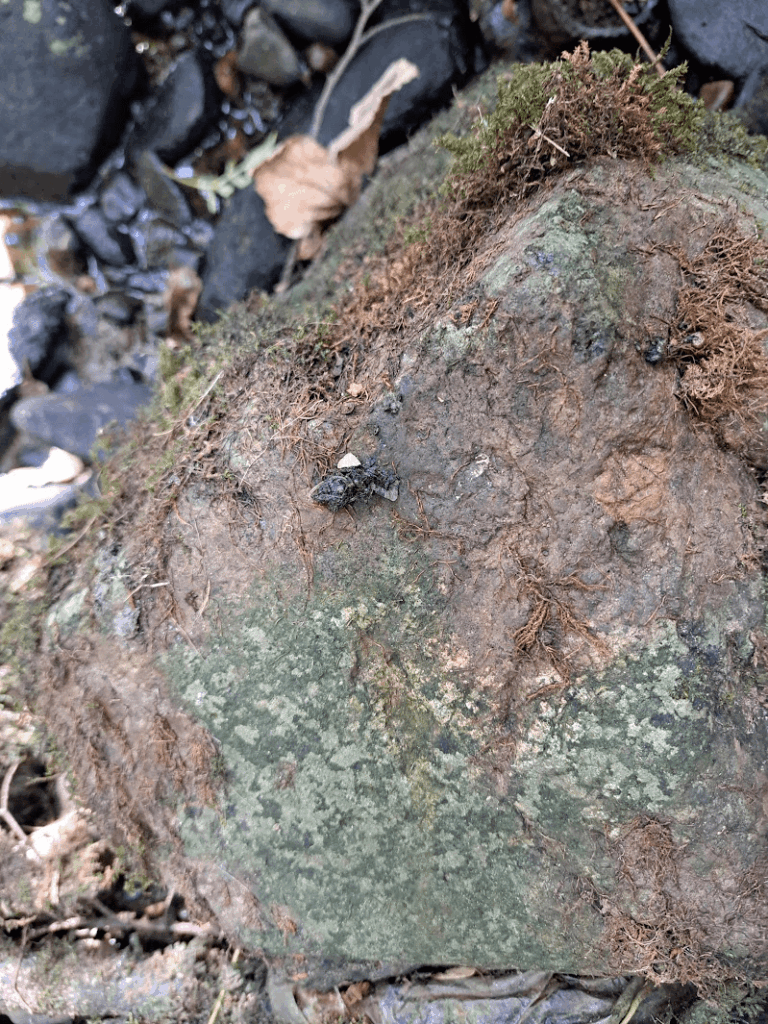
Image: Other signs of otter are their spraint, often left on rocks.
What does an otter survey involve?
On an otter survey we would look out for the signs of otter described above, carefully examining river courses or marine sites. We’ll also look for potential holts (dens) or wallows where otters might have been resting. If necessary, we could also use camera trapping to gather evidence of otters actively using the site.
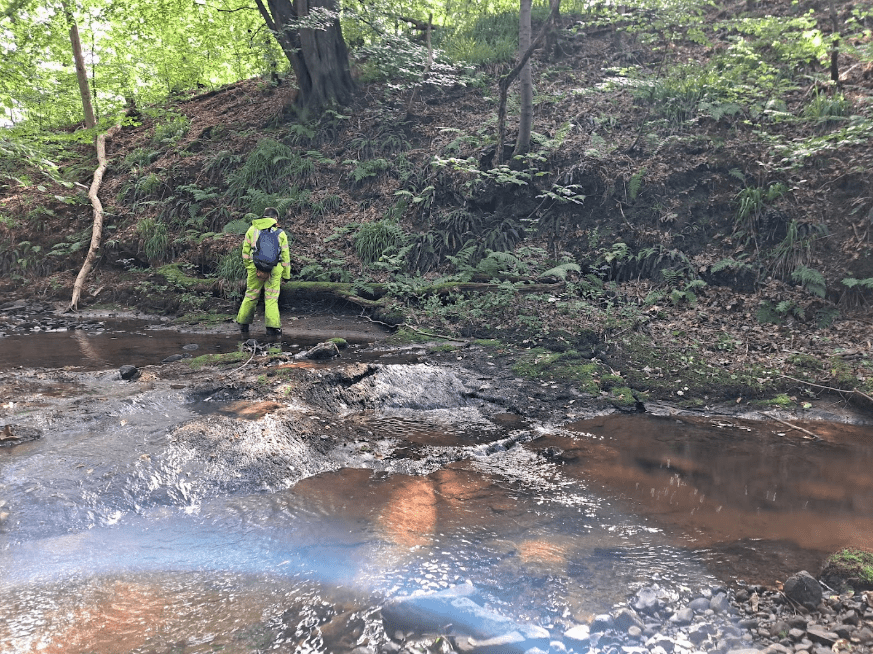
Image: The EP Ecology team examine a riverbank for signs of otter
When can I get an otter survey?
Otter surveys can take place all year round, although this can depend on the weather conditions.
I need an otter survey, can you help?
Our expert team at EP Ecology can help with otter surveys across Scotland. Get in touch for a free quote today (email info@careful-sapphire-emu.185-220-60-54.cpanel.site)
FAQs | Water Vole Surveys
Why do I need a water vole survey?
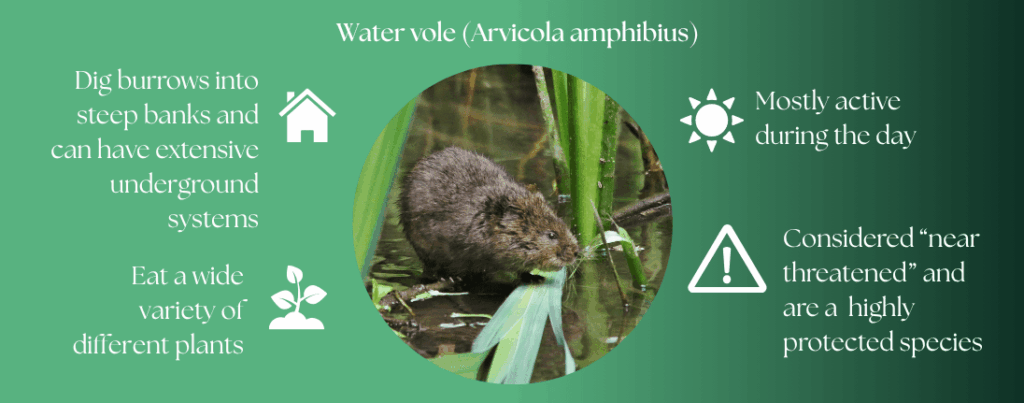
Water voles are considered “near threatened” in Scotland and endangered in England and Wales, and have full protected species status. They’ve experienced significant habitat loss and been heavily predated by the American mink, a non-native species. You may have had previous ecological surveys requesting further water vole surveys or live in an area with river courses that might have potential habitat for water voles, therefore your local planning authority may have asked for a water vole survey.
Where can water voles be found?
In Scotland, water voles predominantly live on riverbanks, around lochs and ponds, and in marsh or wetlands. There is also an urban population in Glasgow that live in grasslands, where they mostly live underground. In different areas of Scotland, such as Loch Ard in Stirlingshire, there have been releases of water voles into the wild. It is hoped that the species can make a comeback.
What are the signs of water voles?
Some of the key signs to look out for include their distinctive droppings – often described as ‘tic tac’ shaped, approximately 8-12mm long and 4-6mm in diameter. They will often leave these droppings in latrines which can mark out their territory. When they feed on vegetation, there is often a clear 45 degree angle cut left on the plant.
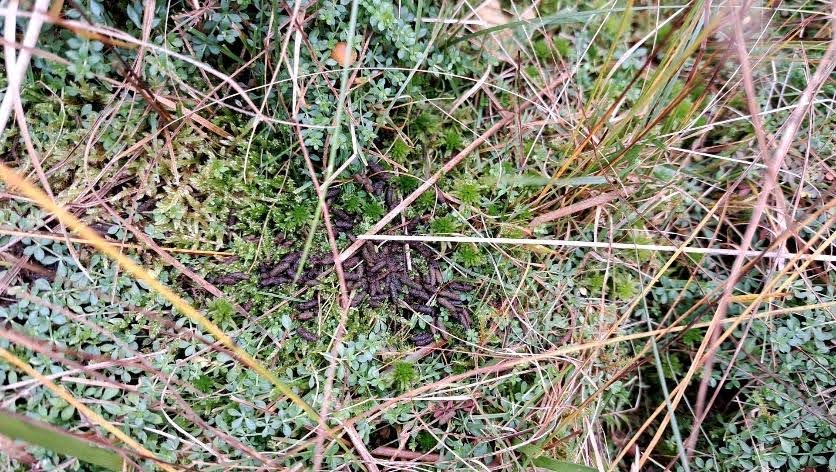
Image: Signs of water voles include piles of droppings in latrines
What does a water vole survey involve?
A water vole survey would involve looking for signs such as latrines, piles of vegetation, pathways, footprints, and burrows in the banks of water courses. As water voles are active during the day, we would also keep on the look out for them. The survey would also assess whether the habitat would be suitable for water voles.
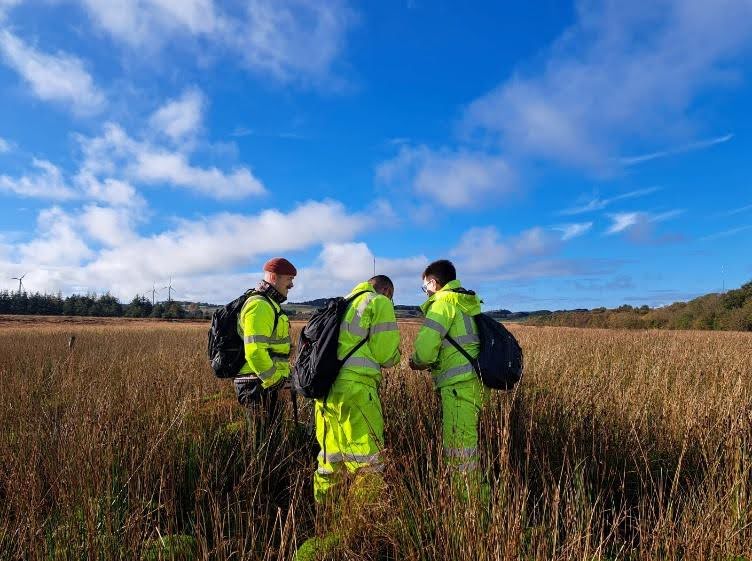
Image: The EP Ecology team investigating evidence on a water vole survey.
When can I get a water vole survey?
Habitat surveys can take place ideally between March and November. Activity surveys should take place between April and October. Outside these times, water vole activity can be more limited and the signs harder to spot.
I need a water vole survey, can you help?
EP Ecology can deliver water vole surveys across Scotland – get in touch to discuss your needs and for a free quote (email info@careful-sapphire-emu.185-220-60-54.cpanel.site)
FAQs | Bird Surveys
Why do I need a bird survey?
Birds, and their nests, are legally protected, and so your local planning authority has a duty to ensure they are not harmed by development. Some birds have further protections in place, these are known as Schedule 1 birds. This includes species like barn owl, red kite, osprey, golden eagle, kingfisher, capercaillie, amongst many others. Disturbing schedule 1 birds is an offense. For some developments, you may have been asked to do a wintering bird survey, in order to assess the impact of the proposed development. Many birds come to Scotland in the winter, such as geese looking for foraging grounds.
What does a bird survey involve?
There are various types of bird surveys which all differ slightly. A breeding bird survey typically involves starting before sunrise and the surveyor walks through the site aiming to identify and record all of the bird species encountered. A wintering bird survey is usually when the site has populations of migratory species which come to the UK. Like a breeding bird survey, the surveyor would walk through the site and look for and record all the birds present. A nesting bird survey will involve a qualified ecologist checking a site for evidence of active nesting birds. Multiple repeat surveys will be required for most survey types.
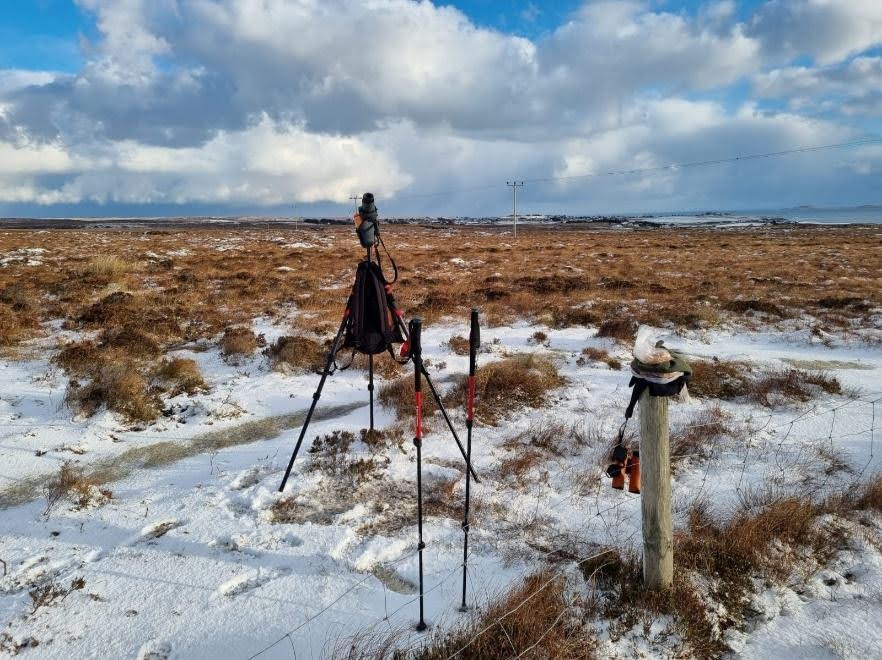
Image: Telescope set up for a snowy winter bird survey.
When can I get a bird survey?
Breeding bird surveys take place when most birds are breeding, ideally between late March and early July, although further surveys could take place in August and September. There is a similar time frame for nesting bird surveys. Wintering bird surveys would take place during November until February.
What if bird nests or breeding birds are found?
If any development works are happening, these will need to stop in the vicinity of any active nests until the checks have fledged (left the nest). Our expert team can advise on suitable mitigation measures depending on the bird species present.
I need a bird survey, can you help?
Our ornithological experts can assist with bird surveys across Scotland. Get in touch to discuss your needs (info@careful-sapphire-emu.185-220-60-54.cpanel.site).
Still Have Questions?
We’re here to help. Contact EP Ecology today for expert guidance, quotes, or to schedule a survey.
Call us on 01355 457577
Email info@careful-sapphire-emu.185-220-60-54.cpanel.site